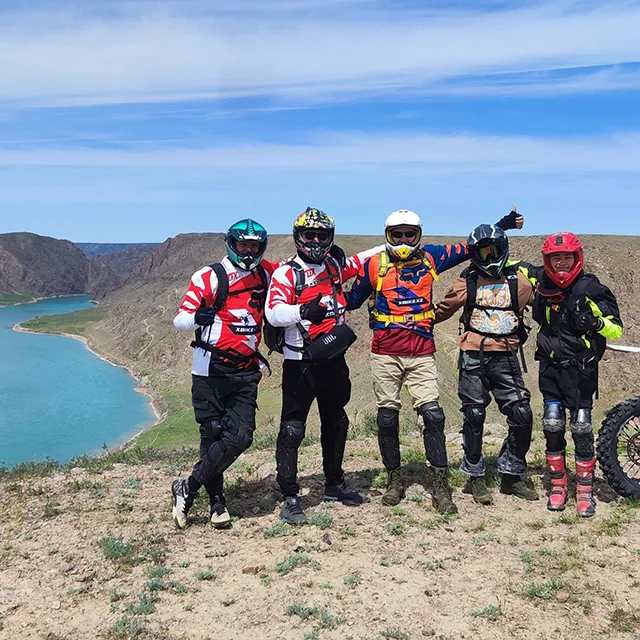
When the mountains above Almaty are under snow or cloud, we head north to the Ili River. It is a different landscape: flat steppe, yellow cliffs over green water and sand hissing under the tyres. The main stop on this bank is Tamgaly-Tas, where images of the Buddha and Tibetan inscriptions are carved into the rock. Not far away, in the middle of the steppe, stands a fortress built for a film.
First, a common mix-up. Tamgaly-Tas on the Ili and the UNESCO-listed Tamgaly are two different places. The Tamgaly petroglyphs lie in the Chu-Ili mountains and have nothing to do with the Buddhist rocks on the river. If your navigator sends you into the mountains, you are heading for the wrong one.
At a glance
- Where: the right bank of the Ili River near Konaev (formerly Kapchagay), north of Almaty.
- What to see: Buddhist carvings and inscriptions, the fortress from the film Nomad, the river canyon.
- How old: researchers date the main carvings to the second half of the 17th century.
- With a guide: four electric bike routes along the Ili, from 40,000 to 60,000 KZT, with a transfer from Almaty included.
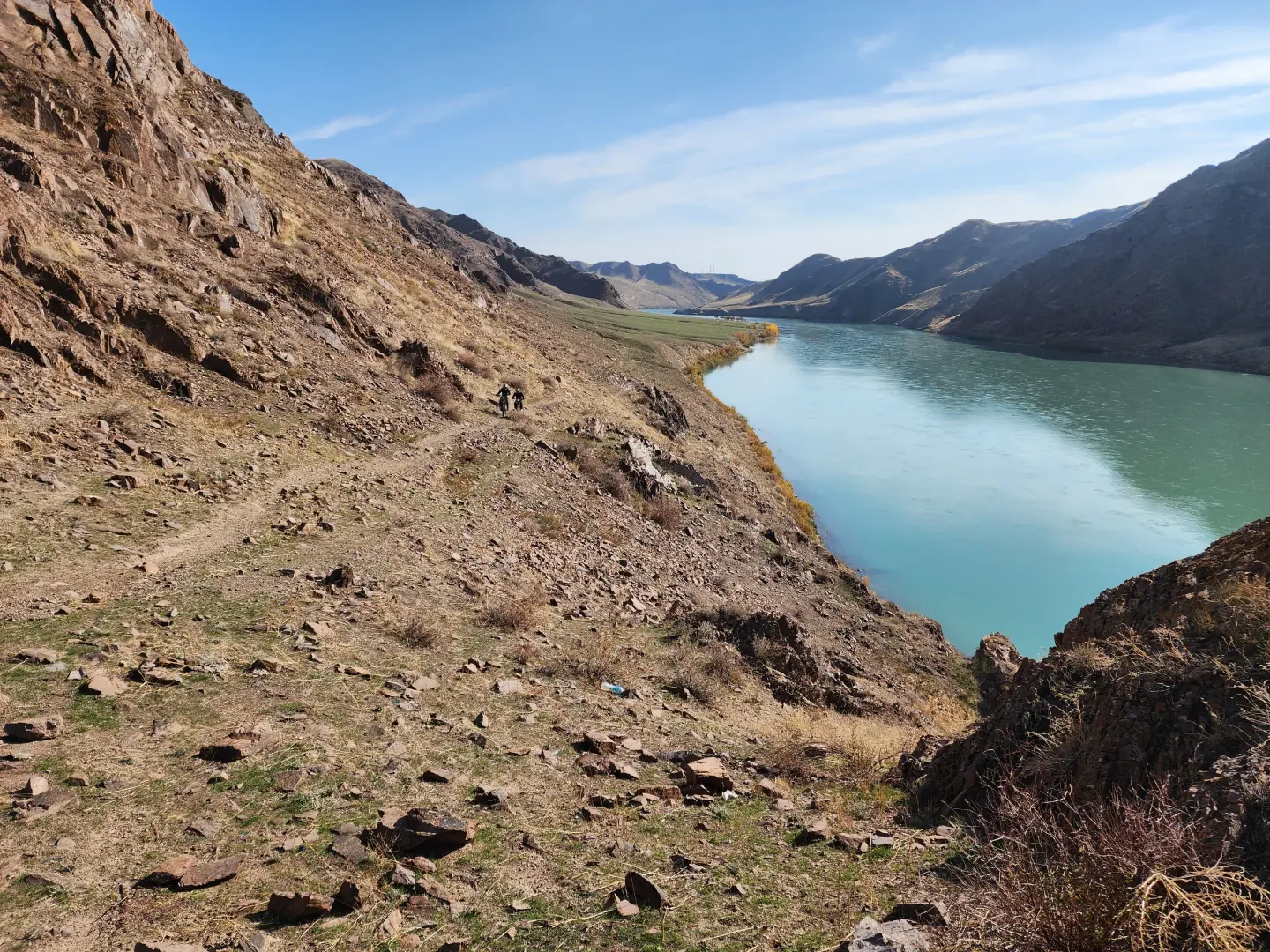 Trail above the Ili canyon at Tamgaly-Tas, 27 October 2024
What is carved on the Tamgaly-Tas rocks
The best known image is the four-armed bodhisattva Avalokiteshvara. Next to it are Shakyamuni Buddha and the Medicine Buddha, surrounded by Tibetan and Oirat inscriptions, including the mantra "Om mani padme hum". You stand by the water, the Ili flowing on your right, and above your head are lines cut about three hundred and fifty years ago.
Stories about Tamgaly-Tas often mention "a thousand years". Researchers say otherwise. According to the description of the site, the first images were carved in 1677 under the Dzungar ruler Galdan Boshugtu, and the last inscription was left by the Kalmyks in 1771. The same source notes that some drawings on the southern cliff were made in the 1950s to 1970s for filming and have no historical value. They are hard to tell apart by eye, so photograph everything and trust the dates.
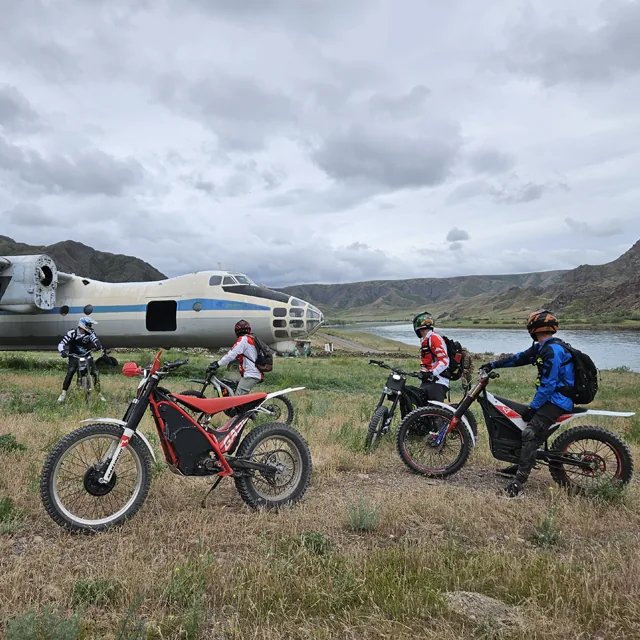 A stop at the Tamgaly-Tas rocks on the Ili valley route
Nobody touches, paints over or signs the carvings. They have lasted more than three centuries; let them last after us too.
The fortress from the film Nomad
The fortress was built for the film Nomad, shot in 2004. It was never taken down: walls, watchtowers and houses still stand in the empty steppe by the river. It is also called Nomad City. From the ridge above the valley you see how small it is against the river; inside, the walls feel real.
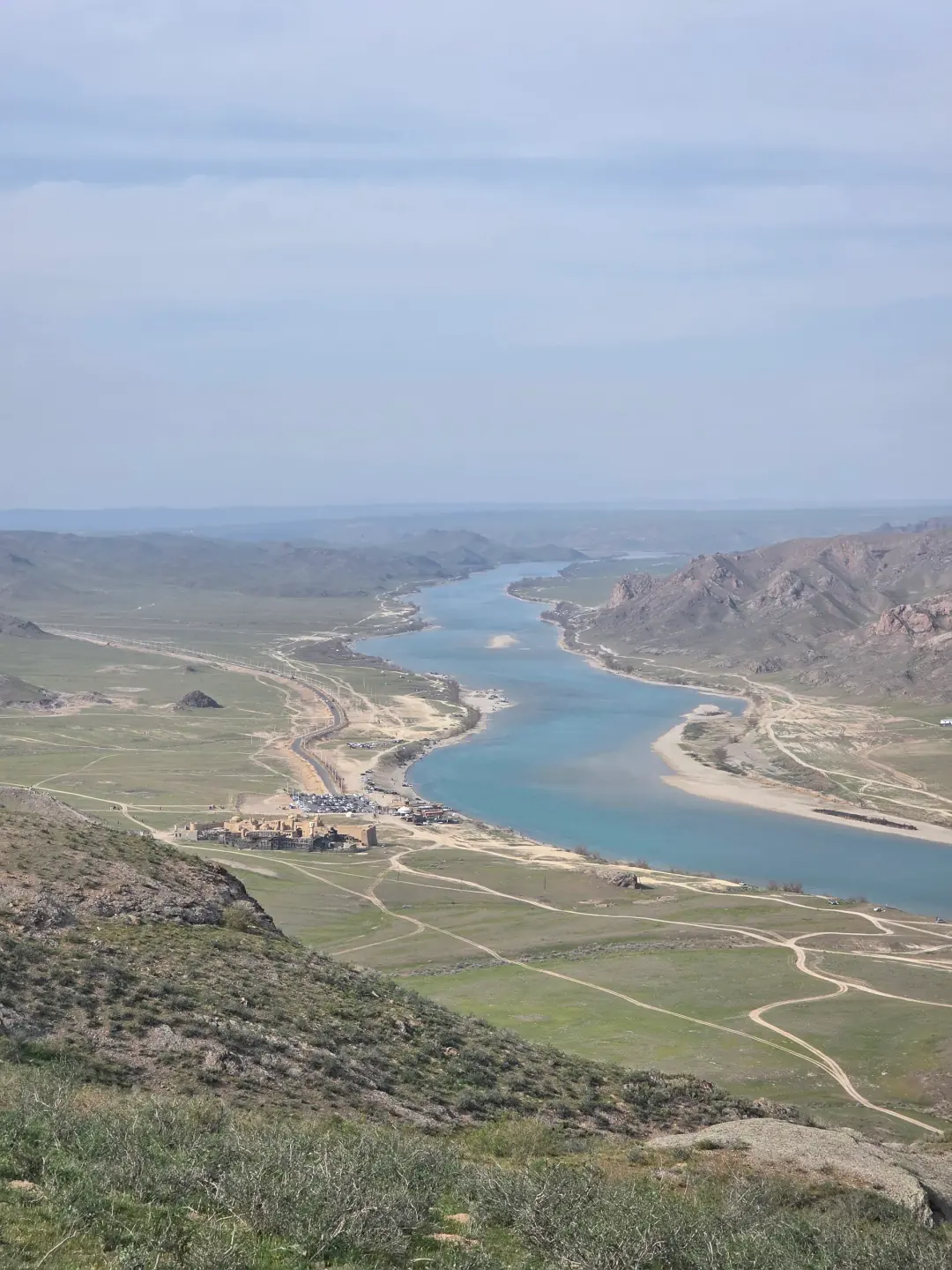 View from the ridge to the Nomad City fortress, 4 April 2026
A separate Nomad Fortress route goes there: fast dirt trails across the steppe, riding over the hills around the walls and a ride back where you can open the throttle.
Getting there on your own
By car, drive from Almaty towards Konaev. The last stretch to the riverbank is dirt and sand, so a car with decent ground clearance helps. Sources give different travel times and distances, from a couple of hours to 170 km, so plan the route to a specific point in your navigator instead of trusting numbers from other articles.
Bring water for the whole day, a cap and closed shoes: underfoot there are stones, sand and steppe thorns.
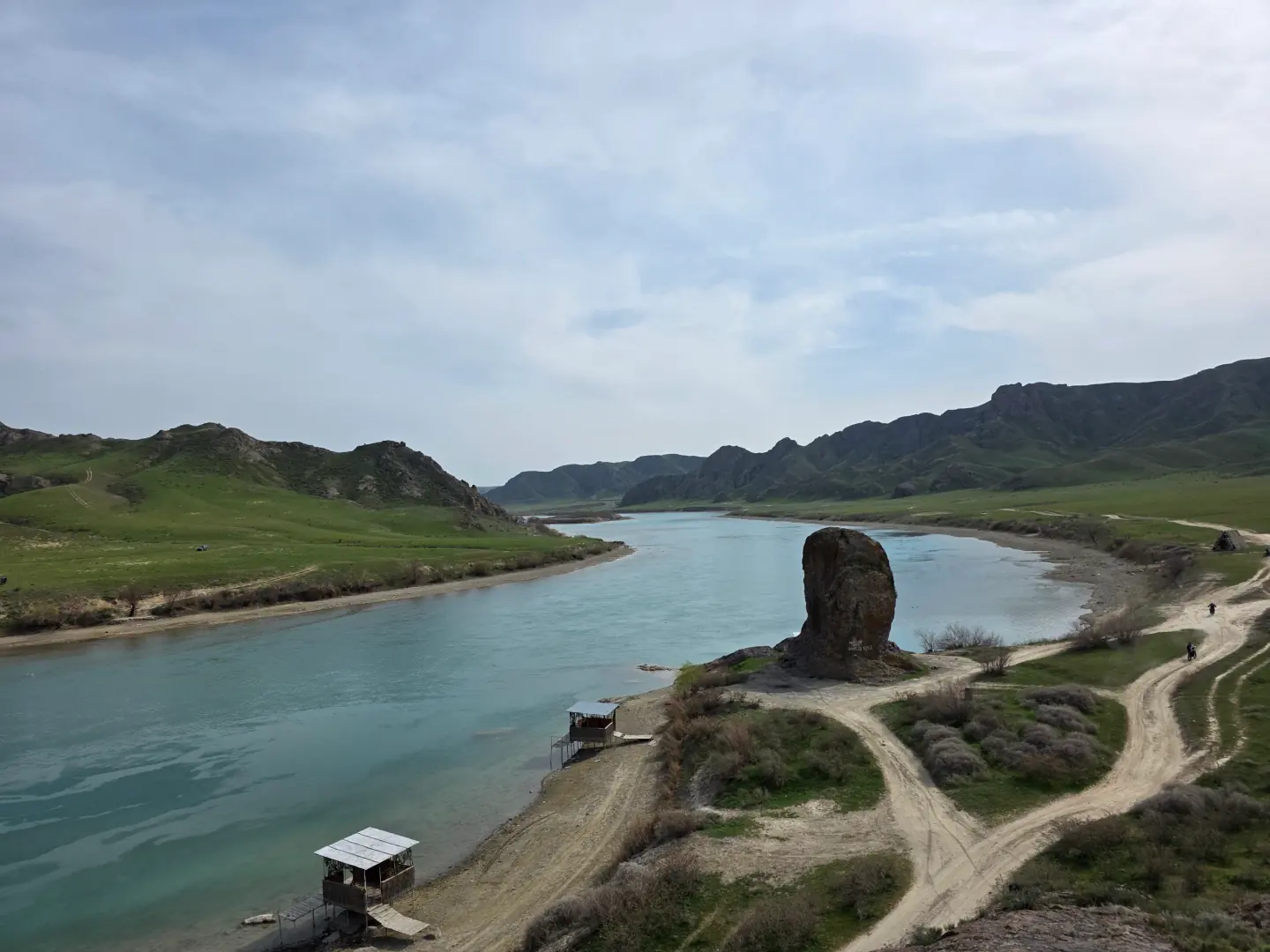 A lone rock at a bend of the Ili, 4 April 2026
Electric bike routes along the Ili
We ride four routes along the Ili. Each takes a full day; a transfer from Almaty and back is included, as are the bike, protective gear and guide. The base price is with a Sur-Ron Light Bee; other fleet models can be chosen for a supplement.
Swipe to see all columns
| Route | Who it suits | Difficulty | Price |
|---|---|---|---|
| Ili River Valley (light) | beginners | 2 out of 10 | 50,000 KZT |
| Nomad Fortress | intermediate | 3 out of 10 | 40,000 KZT |
| Ili right bank | intermediate | 3 out of 10 | 50,000 KZT |
| Ili left bank (hard) | experienced | 6 out of 10 | 60,000 KZT |
The light route crosses open steppe to Tamgaly-Tas: packed dirt, sandy sections and lunch by the river. There are no tight forest turns or steep climbs, which makes it a good first day on a bike.
The right bank reaches the same rocks another way, over stones and narrow trails above deep water, past an emergency services training ground. It is a long distance, so it needs bikes with large batteries and a habit of saving charge.
The left bank is the hardest option. There are no roads, only goat trails on crumbling rock above fast water. A throttle mistake can end in the river; this route is for experienced riders.
To compare the Ili with the mountains, tracks and sands, see the guide on where to ride enduro in Almaty.
When to go
The steppe along the Ili helps when the mountain routes are snowed in. Our photo archive has rides here in January, March, April, June and October. The guide confirms the state of the riverbank and the programme for your chosen date.
FAQ
Where is Tamgaly-Tas? On the right bank of the Ili River near Konaev (formerly Kapchagay), north of Almaty. The last part of the road is dirt.
How old are the Tamgaly-Tas carvings? Researchers date the main images to the second half of the 17th century: the first were carved in 1677 and the last inscription dates from 1771. Some drawings on the southern cliff were made in the 20th century for filming.
Are Tamgaly-Tas and the UNESCO Tamgaly the same place? No. The UNESCO-listed Tamgaly petroglyphs are in the Chu-Ili mountains. Tamgaly-Tas stands on the bank of the Ili River, and its carvings are Buddhist.
Do I need riding experience for an Ili tour? Not for the light route: difficulty 2 out of 10, with a briefing before the start. The right bank and the fortress are intermediate routes, and the left bank is for experienced riders only.
Is the transfer from Almaty included? Yes. On all four Ili routes the transfer from Almaty and back is included in the price.
How much is a Tamgaly-Tas tour? The light route to Tamgaly-Tas costs 50,000 KZT per person with the base bike. Other fleet models carry a supplement; the booking form shows the exact total.
What should I bring? Water for the whole day, sunscreen, a cap and closed shoes. We provide the riding gear.